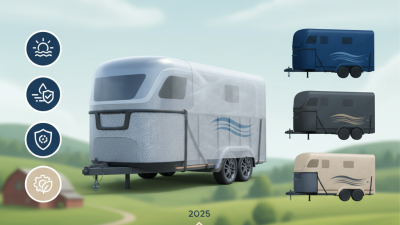
Choosing the right Horse Trailer Cover is more than a cosmetic decision. It protects paint, seals, vents, tires, and interior fittings from sunlight, rain, dust, and winter moisture. The American Horse Council’s 2017 Economic Impact Study estimated 7.2 million horses in the United States. That scale reflects a large transport community with valuable equipment to protect. The RV Industry Association also reported 342,220 wholesale RV shipments in 2024, showing continued demand for mobile travel equipment. Horse trailers remain a specialized segment. They need specialized thinking.
Dr. Rebecca Gimenez, an equine technical-rescue specialist, offers a useful safety principle: “Horses are flight animals.” A cover must respect that reality. It should fit tightly without blocking ventilation, rubbing corners, or loosening near doors. Look for breathable fabric, reinforced seams, UV resistance, and secure straps. Measure the trailer carefully. Small errors matter.
The best choice also depends on storage conditions. A trailer parked beneath trees needs different protection than one exposed to desert sun. A waterproof cover sounds ideal, but trapped condensation can quietly encourage corrosion. That detail is easy to miss. So is checking the cover after strong wind. These are not dramatic failures, yet they can become expensive ones. This guide examines seven practical selection points, including fit, fabric weight, ventilation, access, fastening systems, maintenance, and warranty support. No cover is perfect. The honest goal is controlled protection, not absolute protection. Reliable decisions begin with verified measurements, credible manufacturer specifications, and attention to the trailer’s real surroundings.
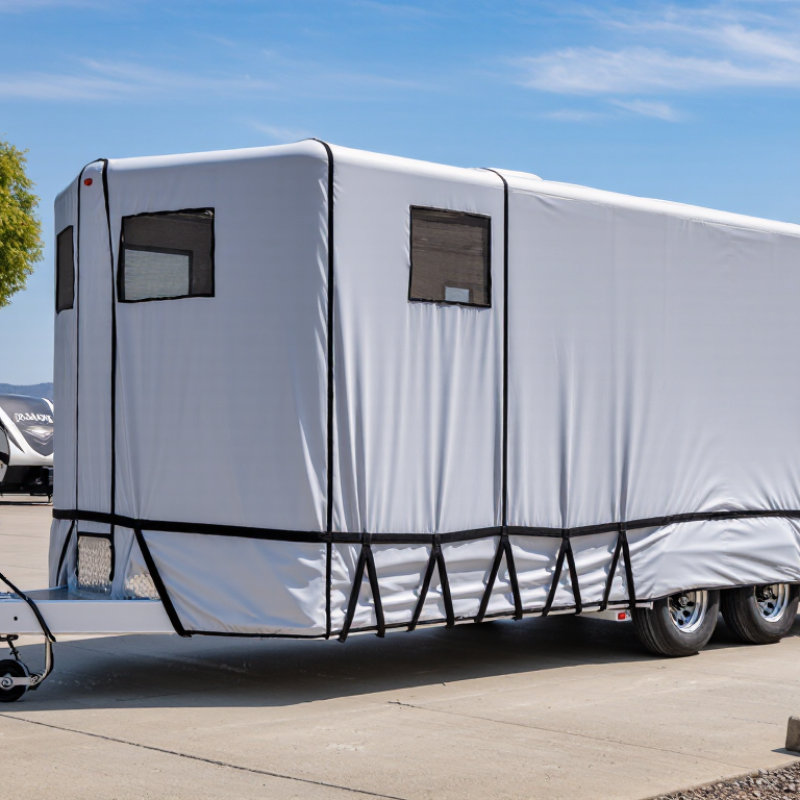
Before choosing a horse trailer cover, measure the trailer itself, not its advertised capacity. Record body length, width, roof height, and the highest point near the vents. Add the spare tire, rear ramp, mirrors, and front hitch to your notes. A tight cover can strain seams. An oversized one can flap violently.
Shape matters more than many buyers expect. A gooseneck trailer needs extra material around its raised front section, while a straight-load trailer may require a simpler profile. The 2023 American Horse Council Foundation Economic Impact Study estimated 6.6 million horses in the United States, showing how varied trailer use can be. One standard pattern will not fit every hauling setup. Measure twice.
Coverage needs depend on storage conditions. Outdoor parking requires full coverage, strong UV resistance, waterproofing, and ventilation beneath the roofline. NOAA’s UV Index guidance warns that unprotected surfaces receive increasing radiation as the index rises, even on bright winter days. For indoor storage, a lighter dust cover may be enough. Avoid blocking vents or trapping moisture around hinges and rubber seals.
I once assumed a loose fit offered better airflow; wind-driven dust proved otherwise. My measurement sheet also missed the rear ladder, an avoidable mistake. Check every protrusion before ordering.
7 Tips for Choosing the Best Horse Trailer Cover?
Weather resistance should guide every material decision. NOAA’s 2024 Billion-Dollar Weather and Climate Disasters report recorded 27 major U.S. events. Your trailer may face less dramatic conditions, but repeated rain, wind, and heat still weaken fabric.
Choose tightly woven polyester with a durable water-repellent finish or a flexible coated layer. Solution-dyed fibers usually hold color better under sunlight. ASTM D751 evaluates coated fabrics for breaking strength, tear strength, and hydrostatic resistance. Ask manufacturers for test results, not vague claims. A 600-denier label helps, but denier measures yarn weight, not complete durability.
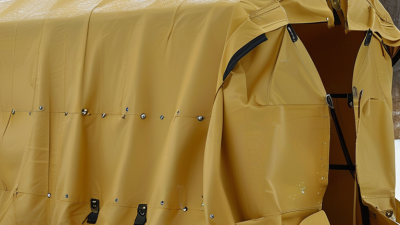
Tears often begin at seams, corners, and strap openings. Look for reinforced stitching and smooth, protected edges. The cover should fit firmly without dragging across sharp hardware. I once judged covers by thickness alone. That was a mistake. Heavy fabric can still crack after repeated folding. Check whether the material remains flexible in cold conditions. Then inspect the grommets. Weak grommets can fail before the fabric does.
Daily wear also includes dust, horse hair, and frequent removal. Select a cover that cleans with mild soap and dries quickly. Avoid trapping moisture beneath it. A small ventilation gap matters. Reliable protection comes from balanced materials, careful construction, and evidence from recognized testing methods.
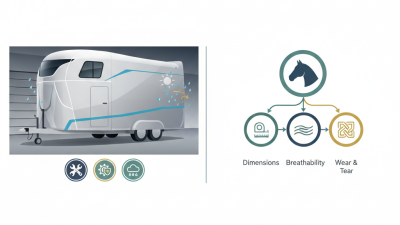
Choose materials that resist weather, tears, and daily wear. The chart compares typical moisture regain values for common textile fibers; lower values generally indicate less moisture absorption, although coating quality and construction also determine waterproof performance.
Important: Fiber moisture regain is only one selection factor. A durable horse trailer cover should combine weather-resistant fabric, tear-resistant construction, strong seams, and a secure fit.
Compare Ventilation, Fit, and Access Features for Practical Use
After several seasons of covering trailers, I learned that fabric thickness is not the only concern.
Tip 1: Check ventilation panels near the roof and rear. Warm, trapped air can create condensation inside the trailer. Tip 2: Choose breathable material, not simply heavy material. A cover that feels strong may still hold moisture against metal surfaces. Tip 3: Inspect the seams carefully. Reinforced stitching matters around corners, mirrors, and door openings.
Tip 4: Measure your trailer’s actual length, height, and width. Include spare tires, rear bars, and roof equipment. A loose cover flaps loudly in wind and may scrape painted areas. A tight cover can strain zippers and seams. Tip 5: Look for adjustable straps and elastic edges. They help maintain a closer fit, though adjustment can become annoying after repeated use. I still sometimes measure twice and choose poorly.
Tip 6: Test access features before buying. Zippered panels should reach side doors, tack compartments, and feeding areas without removing the whole cover. Tip 7: Examine the rear opening. It should allow quick access while keeping rain away from exposed interior spaces. Use covered zippers and sturdy fasteners. Check them with cold hands. Small details become important at dawn, especially when the cover is damp, muddy, or pulled tight by wind.
A horse trailer cover protects more than paint. It shields rubber seals, vents, flooring, and interior fittings from rain, dust, and ultraviolet exposure. The American Horse Council Foundation’s 2023 economic study valued the U.S. horse industry at approximately $177 billion. That figure reflects why careful trailer storage matters. A loose cover can create damage instead of preventing it.
Tip 1: Choose secure fasteners. Use adjustable straps with corrosion-resistant buckles, reinforced webbing, and stitched attachment points. Bungee cords alone may stretch, snap, or whip against painted panels. Cross the straps beneath the trailer, but keep them clear of axles, tires, and brake components. I prefer checking each buckle by hand. Small movement becomes loud flapping during a windy night.
Tip 2: Inspect the design details. Look for soft inner fabric, ventilation panels, and reinforced corners. Breathability matters because trapped condensation can encourage mildew and surface corrosion. NOAA’s UV Index guidance classifies levels of 8 or higher as very high to extreme. A cover with UV-resistant fabric is sensible in sunny regions, though no material lasts forever. That part is often overlooked.
Tip 3: Match the cover to real conditions. Measure mirrors, rear ramps, roof accessories, and wheel wells before ordering. A tight fit reduces wind lift, while excessive fabric collects water. Industry guidance often recommends routine inspections, yet owners still postpone them. I have done that too. Check seams after storms, dry the cover fully, and replace frayed straps before the next journey.
A good horse trailer cover is not simply a cheaper tarp. Measure length, height, mirrors, and rear clearance before shopping. Measure twice. Assess fabric, seams, ventilation, hardware, maintenance needs, and warranty terms. A tight cover can rub paint, while a loose one may flap against metal. My first mistake was ignoring wind exposure. Quality begins with UV-resistant fabric, reinforced seams, and breathable panels. USDA APHIS transport guidance emphasizes ventilation and routine checks, which also matter when a covered trailer sits unused.
Maintenance changes the real price. Check the cover after storms, remove trapped leaves, and dry it before storage. NOAA’s 2023 Billion-Dollar Weather and Climate Disasters report recorded 28 events costing 92.9 billion dollars in the United States. Weather is not a minor variable. Choose corrosion-resistant hardware and accessible straps, then ask whether replacement parts are available. A five-year warranty sounds useful, but read exclusions for wind, mildew, and poor installation.
Compare total ownership cost, not checkout cost. The American Horse Council’s 2023 Economic Impact Study counted 6.6 million horses and 177 billion dollars in annual economic impact. That scale supports protecting working assets, but expensive does not automatically mean durable. Compare fabric specifications, repair options, cleaning time, and expected service life. Leave airflow underneath. Recheck fit each season. I still prefer a custom fit, yet a standard cover may win when budgets are tight and measurements are honest.
| Tip | Decision Dimension | What to Check | Practical Standard | Maintenance Effect | Typical Cost Impact | Recommended Choice |
|---|---|---|---|---|---|---|
| 1 | Measure the Trailer Correctly | Measure the trailer body length, width, height, mirrors, spare tire, air conditioner, vents, and other fixed accessories. | Choose a cover that matches the trailer’s actual dimensions and includes enough room for installed accessories without excessive loose fabric. | A close fit reduces flapping, rubbing, and premature fabric wear. | Low initial cost; incorrect sizing can lead to replacement expenses. | Prioritize accurate measurements over a generic “universal” fit. |
| 2 | Evaluate Fabric Strength | Check fabric weight, tear resistance, seam construction, and whether the material is designed for outdoor storage. | For regular outdoor use, select a multi-layer, breathable fabric with reinforced stress points and durable stitching. | Stronger fabric generally withstands sunlight, wind, and repeated installation better than lightweight storage-only material. | Higher-quality fabric usually costs more but may reduce replacement frequency. | Balance material durability with the trailer’s exposure level rather than choosing the thickest fabric automatically. |
| 3 | Confirm Water Resistance and Breathability | Look for a water-resistant outer layer, sealed or protected seams, ventilation panels, and moisture-management features. | The cover should repel rain while allowing trapped condensation to escape; completely non-breathable covers can retain moisture underneath. | Better airflow helps limit mildew, corrosion, staining, and odor during long-term storage. | Breathable, weather-resistant construction may increase the purchase price. | Choose weather protection that combines water resistance with ventilation, especially in humid climates. |
| 4 | Check UV and Weather Protection | Review the cover’s resistance to ultraviolet exposure, wind, snow, dust, and temperature changes. | For uncovered storage, use a cover specifically rated for prolonged outdoor exposure and fitted with secure straps or buckles. | UV protection helps slow fading and fabric degradation; secure fastening reduces wind damage and abrasion. | Outdoor-rated covers typically cost more than indoor dust covers. | Match the protection level to the storage location: indoor, partially covered, or fully exposed. |
| 5 | Inspect Fit and Protective Details | Assess elasticized hems, adjustable straps, buckles, access panels, mirror pockets, vents, and soft inner surfaces. | Fasteners should hold the cover securely without contacting sharp trailer edges; inner surfaces should minimize paint scuffing. | Proper fit and soft contact areas help prevent wind-driven scratches and reduce the need for frequent repositioning. | Additional fit and access features can raise the price but improve convenience. | Select only the features needed for the trailer’s shape, climate, and storage routine. |
| 6 | Consider Cleaning and Repair Requirements | Check whether the cover is washable, stain-resistant, easy to fold, and supported by repairable seams or replacement straps. | Follow the care label; remove loose dirt before washing, use mild detergent when permitted, and dry the cover completely before storage. | Regular cleaning and complete drying help prevent mildew and preserve water-repellent performance. | Easy-care construction can reduce ongoing labor and maintenance costs. | Choose a cover that can be cleaned and dried conveniently with the equipment available to you. |
| 7 | Compare Total Ownership Cost | Compare purchase price, expected service life, warranty terms, replacement parts, storage needs, and maintenance time. | Use this simple comparison: annual cost = purchase price ÷ expected years of service + estimated yearly maintenance cost. | A durable, repairable cover may offer better value than a cheaper cover that needs early replacement. | The lowest purchase price is not always the lowest long-term cost. | Choose the option with the best balance of fit, protection, maintenance effort, and expected service life. |